 learndesign
CO₂ dragster
Design, draw, carve and race a CO₂-powered dragster from a basswood blank. Thumbnails to a full-size Fusion drawing, then band saw, rasp and sandpaper, then a timed run down the track.
Overview
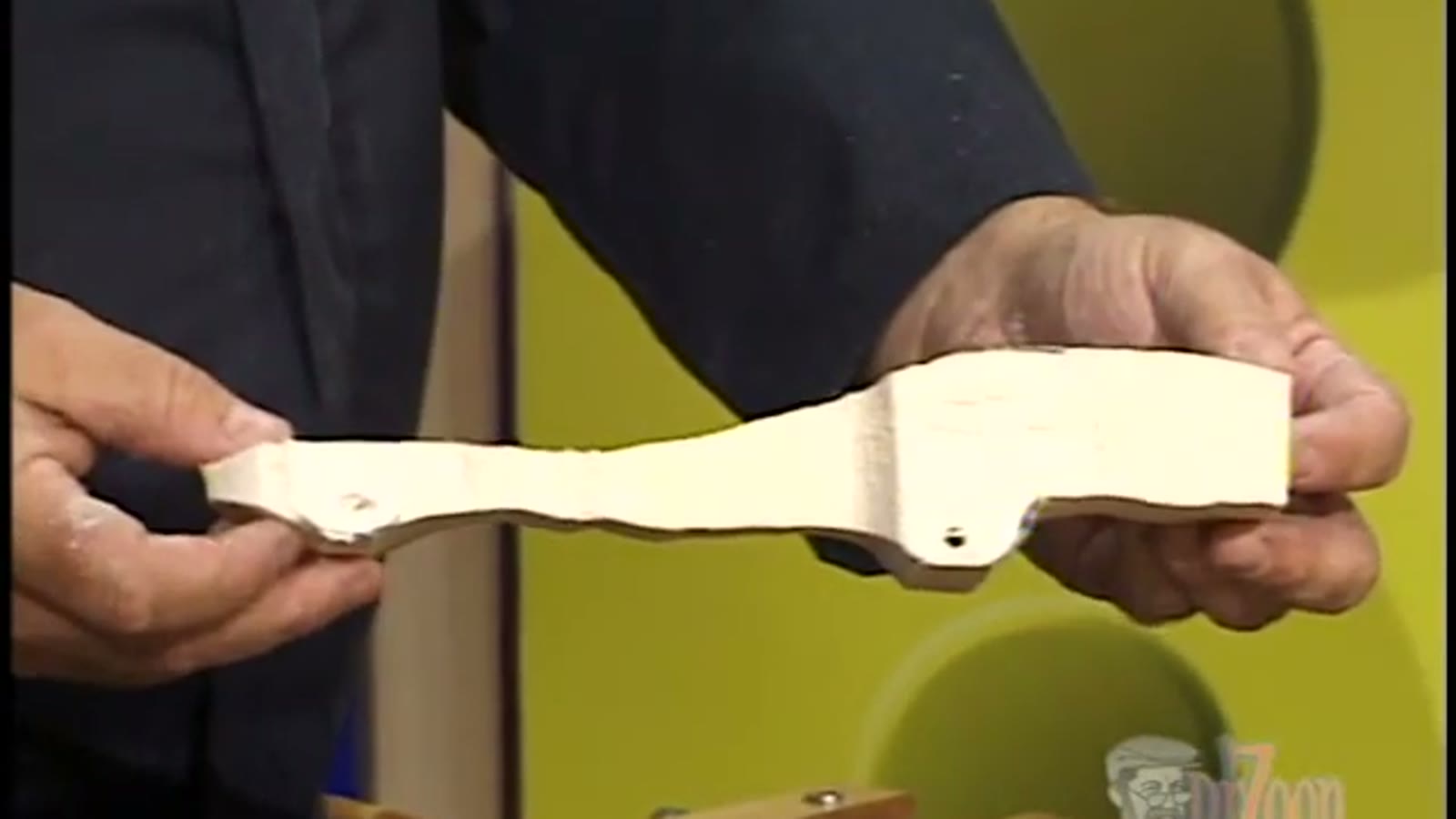
A CO₂ dragster is a block of basswood with a hole in the back for a cartridge. Puncture the cartridge and the gas pushes the car down a 20 m track on a guide line in about a second. The design question is how to take away as much of that block as you can, leave enough to hold the wheels, the cartridge and itself together, and make what is left slip through the air.
The shape is yours. The rules are not. A car that is under the minimum mass, too narrow at the axles, or has a thin wall around the cartridge hole does not run, because it either breaks on the line or is not safe to fire. So the drawing comes first, at full size, with the rule dimensions built in, and it gets checked and signed before wood is cut.
Two things decide the race: how little drag the car makes, and how straight it runs. The first is shape. The second is craft: axle holes parallel and square, wheels true, screw eyes in line. A plain car built well beats a wild car built badly, every time.
Skills needed
- Sketching for formThumbnails first, lots of them. Then side and top views of the three best, then one final drawing.
- Drawing the body at full size in FusionSide and top profiles on the blank dimensions, the cartridge hole and axle holes placed by the rules, printed 1:1 as templates.
- Parameters for the rule bookMinimum widths, hole positions and wheelbase as parameters so the drawing checks itself.
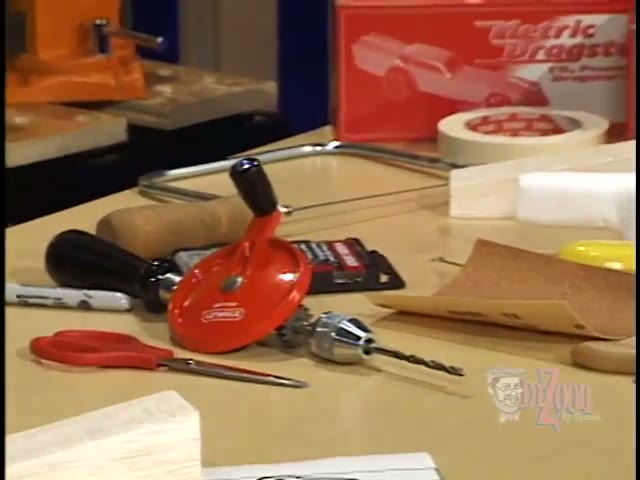
- Band saw, rasp, file, sandpaperCutting to a line, working across the grain, keeping the axle faces flat and parallel. Know the shop safety rules and the tools before you cut.
- Drilling squareAxle holes on the drill press with the block clamped and the fence set, so the axles are parallel and the car runs straight.
- Basic aerodynamicsFrontal area, smooth transitions, where drag actually comes from at 100 km/h on a 20 m track.
Assessment
| Criterion | Developing | Proficient | Exemplary |
|---|---|---|---|
| Research | Pictures with no notes | Three sources, each with a specific observation about drag or structure | Observations show up as decisions in the final design |
| Sketching | Few thumbnails, little variety | Twenty thumbnails that explore real range; three developed with side and top views | Final drawing could be built from without asking a question |
| Fusion drawing | Body drawn but rules not checked | Rule dimensions as parameters; templates print at 1:1 and match the blank | Parametric enough that a rule change updates the drawing |
| Workmanship | Tool marks, tear-out, axles out of square | Smooth surfaces, crisp edges, axles parallel, wheels spin true | Finish like a product; passes spec check first time |
| Aerodynamics | Frontal area unchanged from the blank | Clear reduction in frontal area, smooth transitions front to back | Shape justified against drag sources and tested against another design |
| Race record | Times only | Times, mass, and a reflection with one concrete change | Change tested or reasoned from your own data and others’ |
Workmanship carries the most weight, as it does at every dragster competition.
Deliverables
- A research page with three annotated photos of fast dragsters or real vehicles and what each one taught you
- Twenty thumbnail sketches, three developed sketches with side and top views, and one final drawing
- A Fusion model of the body with the rule dimensions as parameters, plus 1:1 printed side and top templates
- The finished car, within spec, wheels true, screw eyes aligned, painted or finished
- A race record: your times, your mass, and a reflection on what you would change
Materials
- Basswood dragster blank, 305 × 70 × 16 mm, with the 19 mm cartridge hole pre-drilled
- Two axles, four wheels, four washers, two screw eyes, a drinking straw for bearings
- 8 g CO₂ cartridges for race day
- Masking tape, glue stick, 80/120/220 grit sandpaper, wood filler, primer and paint
Steps
Week 1: Research and sketch
- Look at winning CO₂ dragsters and at real fast things: land speed cars, bobsleds, fish. For each of three, write what it does to reduce drag and what it does to stay rigid.
- Twenty thumbnails, side view, in ten minutes. No erasing. Then twenty more if the first twenty look the same.
- Pick three. Draw each at larger scale, side and top, and mark the axle positions, the cartridge hole and the screw eyes. Check each against the spec table.
- Pick one. Draw it clean, both views, dimensioned.
Week 2: Draw it in Fusion
- New design. Set parameters from the spec table: blank length, height and width, cartridge hole diameter and depth, axle hole height, minimum axle width, wheelbase.
- Sketch the blank as a reference. Sketch the side profile on it, then the top profile. Extrude and intersect to see the body in 3D.
- Check every rule against the model with the measure tool. Where you are close to a minimum, add 1 mm; sanding takes material you did not plan to lose.
- Print side and top templates at 1:1. Check the printed length against a ruler before you cut them out. Printers lie.
- Get the drawing checked and signed against the spec table.
Week 3: Cut and shape
- Tape the side template to the blank, lined up with the pre-drilled cartridge hole. Trace it. Do the same with the top template on the top face.
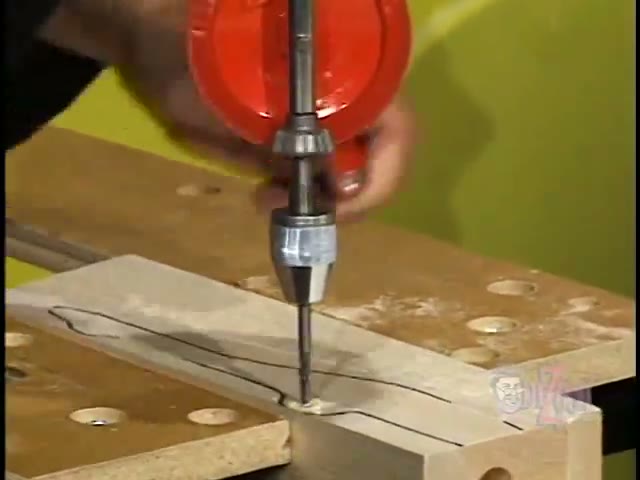
- Drill the axle holes first, on the drill press, block clamped flat against the fence, before any material comes off. Square holes need a square block.
Week 4: Finish, assemble, race
- Prime, sand lightly, paint. Two thin coats beat one thick one. Keep paint out of the axle holes and the cartridge hole.
- Cut straw sections as bearings, press into the axle holes, fit axles, washers and wheels. Spin each wheel; it should run true and free with no wobble.
- Fit the screw eyes on the centreline, in line with each other. Sight down them; a guide line has to pass through both without touching.
- Spec check with whoever is running the race. Fix anything that fails.
- Race day. Two runs each, timed. Record your times and your mass. Watch the other cars and write down what the fastest three have in common.
- Reflection: one thing you would change and why, with evidence from the times.
Stretch options
- Model two body shapes in Fusion and race both; keep the times.
- 3D-print wheels or a nose cone within the rules and compare them to the kit parts!
- Build a photogate timer for the track with an Arduino and two break-beam sensors.